

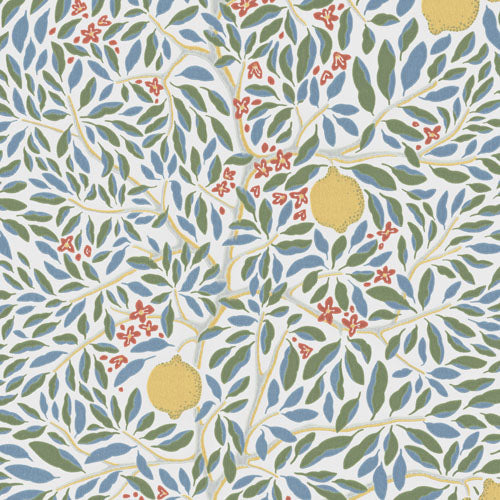

The art of the seamless botanical
Every Norrviva pattern is drawn by hand, by one person. Karolina Reit begins in pencil, draws a motif, redraws it, and fits the pieces together until the pattern tiles with no visible seam. Hiding that seam is the hard part, and the point: a finished pattern should look as though it grew, not as though it was planned. On a wall it seems to keep going, leaves turning and flowers leaning, with nothing to stop the eye.

Karolina and Jérémie, in front of their Citrus Vibrant Bloom wallpaper
The pencil and the plumbing
Norrviva is two people. Karolina Reit draws the patterns; she also teaches, as Faculty Programme Director at Hantverksakademin, the Swedish craft school. Jérémie Hoffsaes does the rest; he calls it the plumbing. They started it together in 2022, drawn by the same things: pattern, colour, and a Swedish way with design that has grace and a little play in it.

Karolina photographing tiny marine flora, Gotland
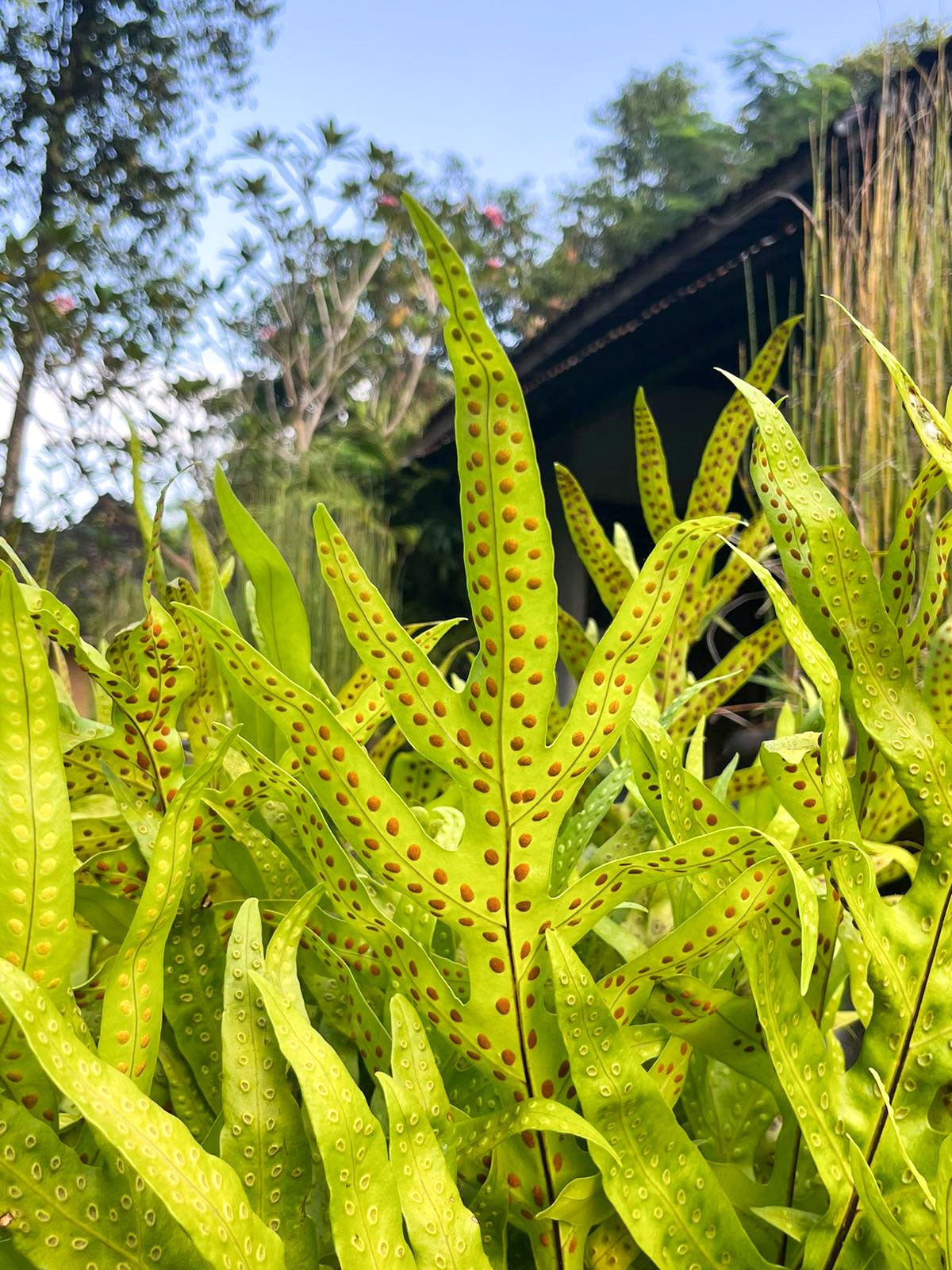
A spore-dotted fern, photographed on a trip
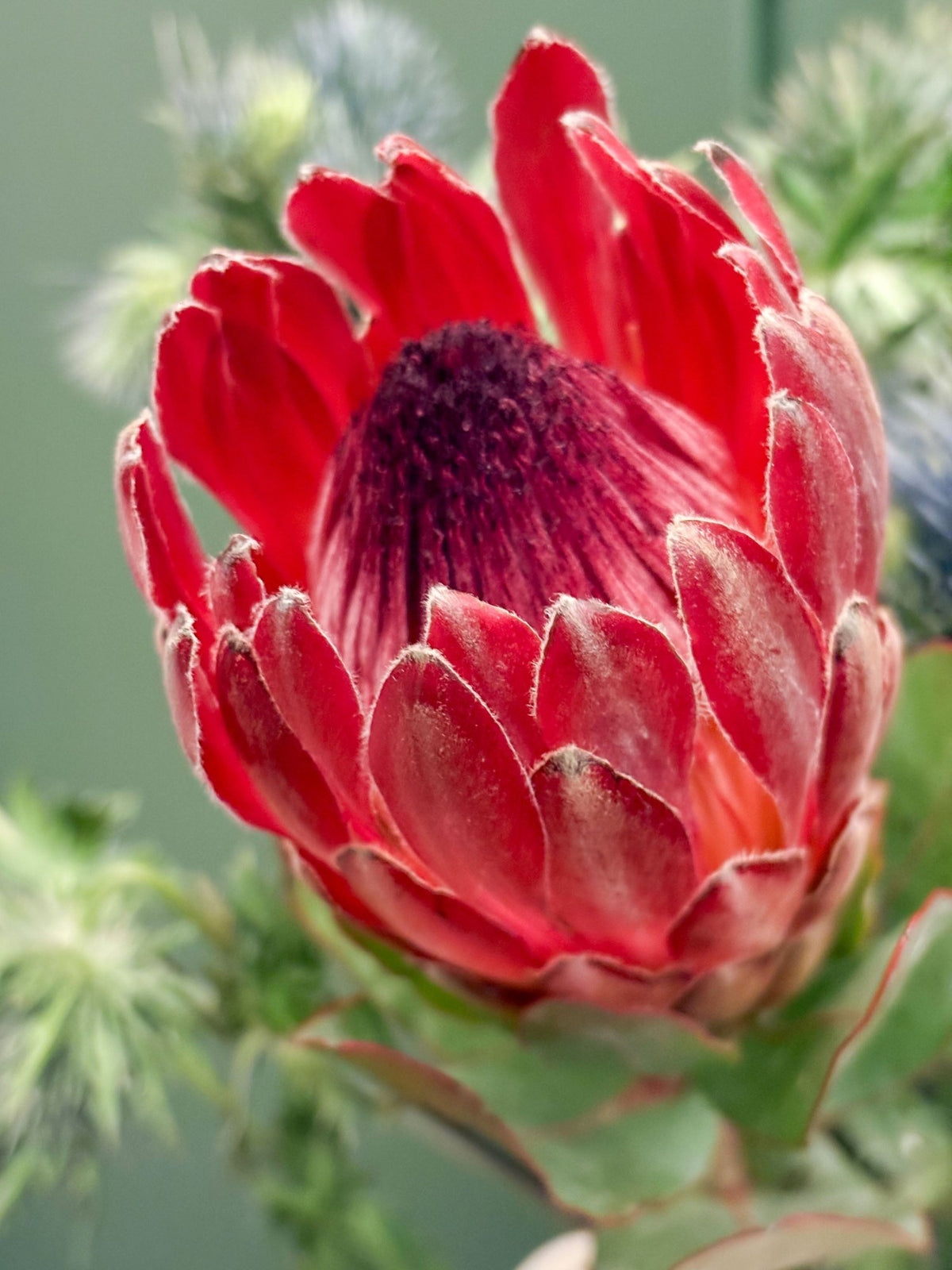
A protea in bloom
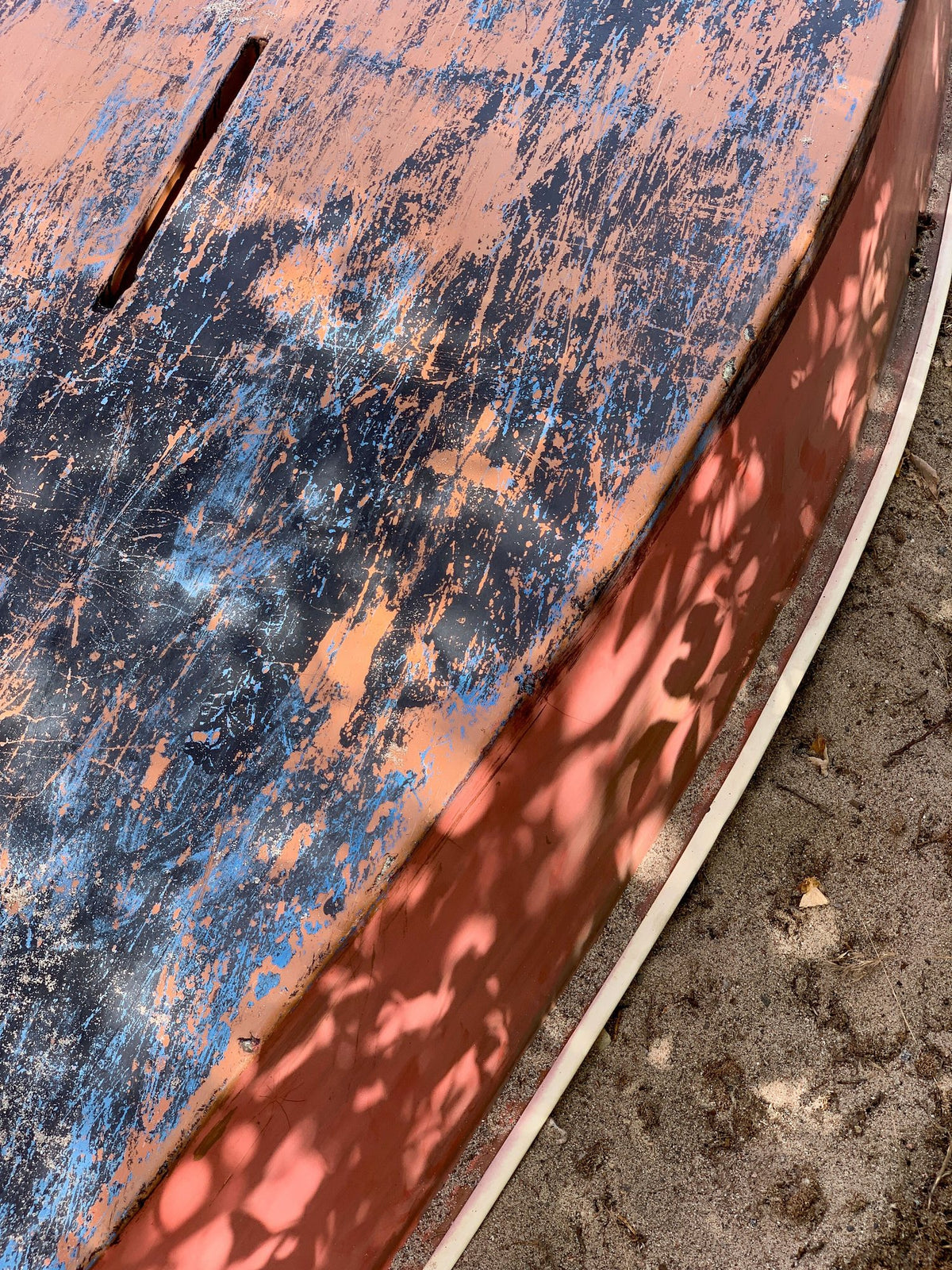
Weathered paint on an old boat hull
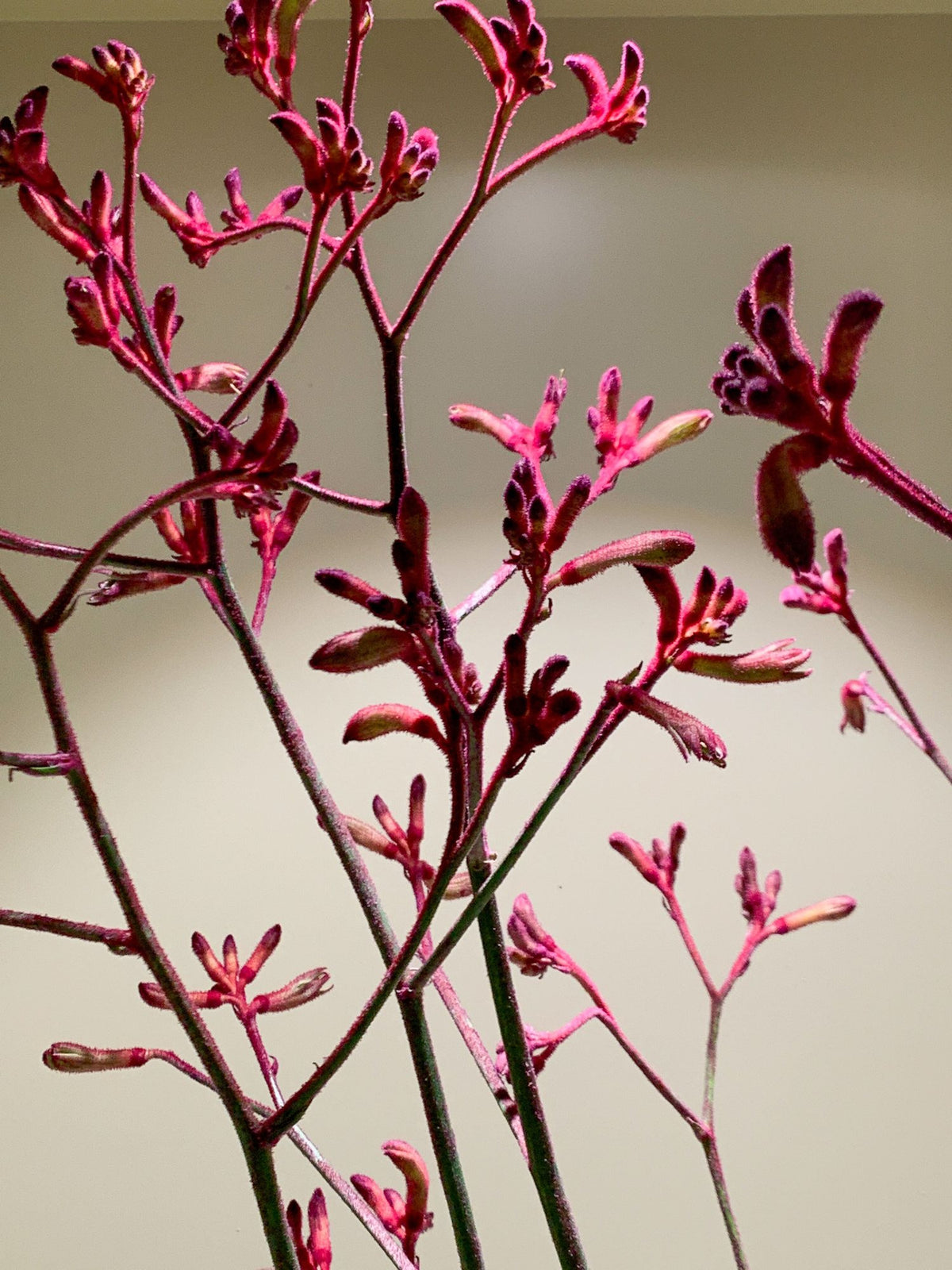
Kangaroo paw flowers, indoors
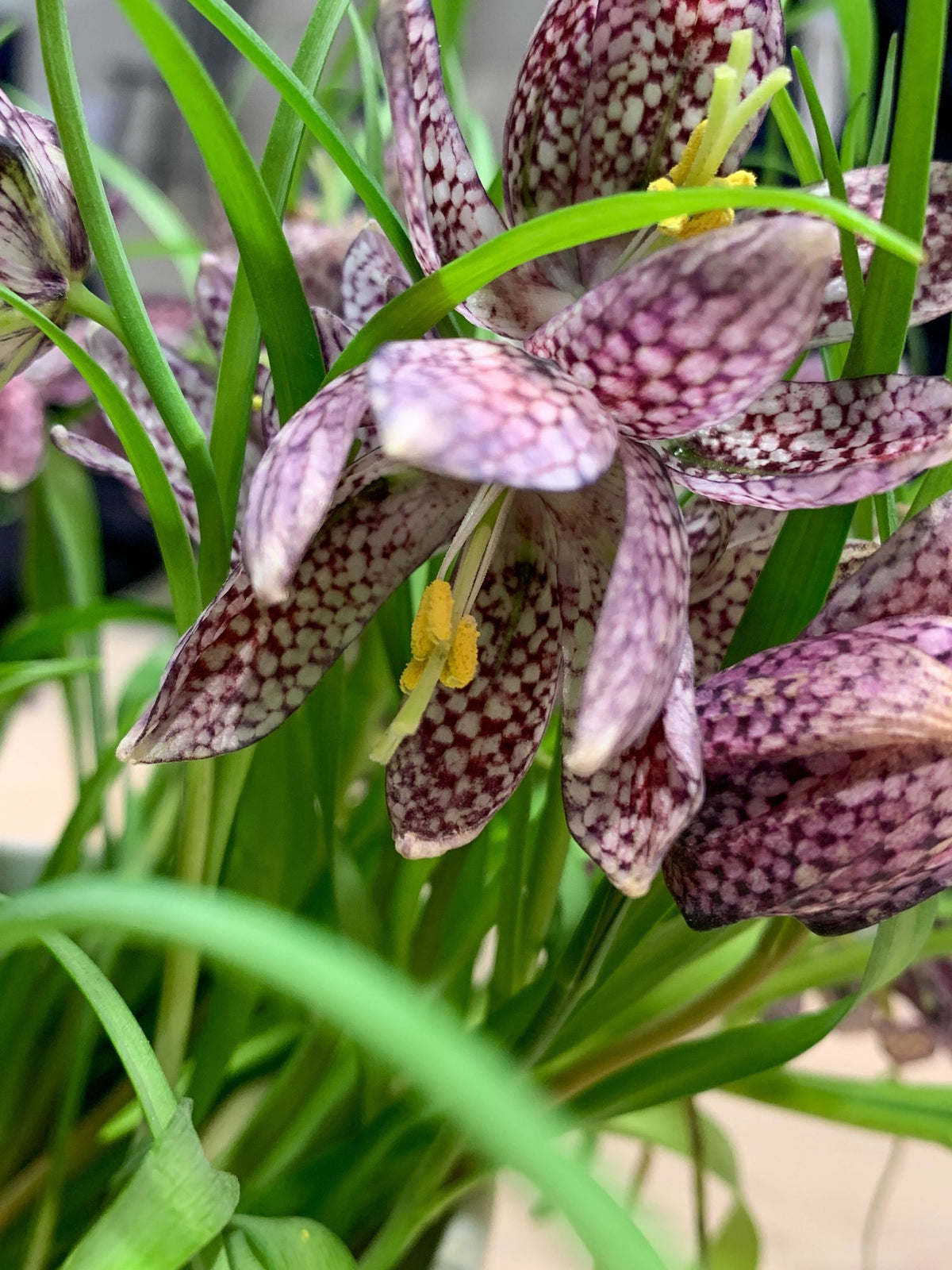
A snake's head fritillary, its petals checkered like woven cloth
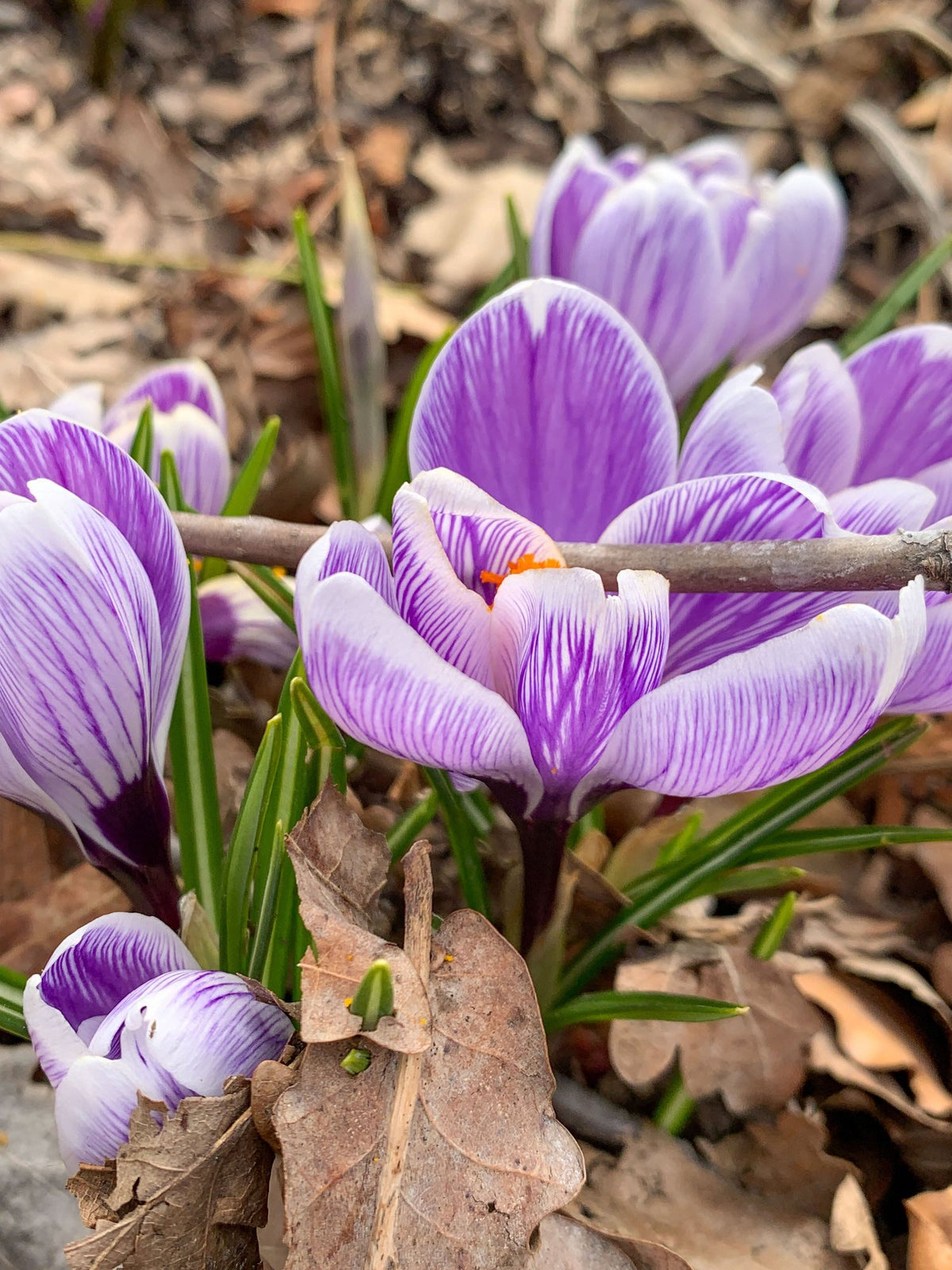
Crocuses in early spring, the flower behind the Krokus pattern
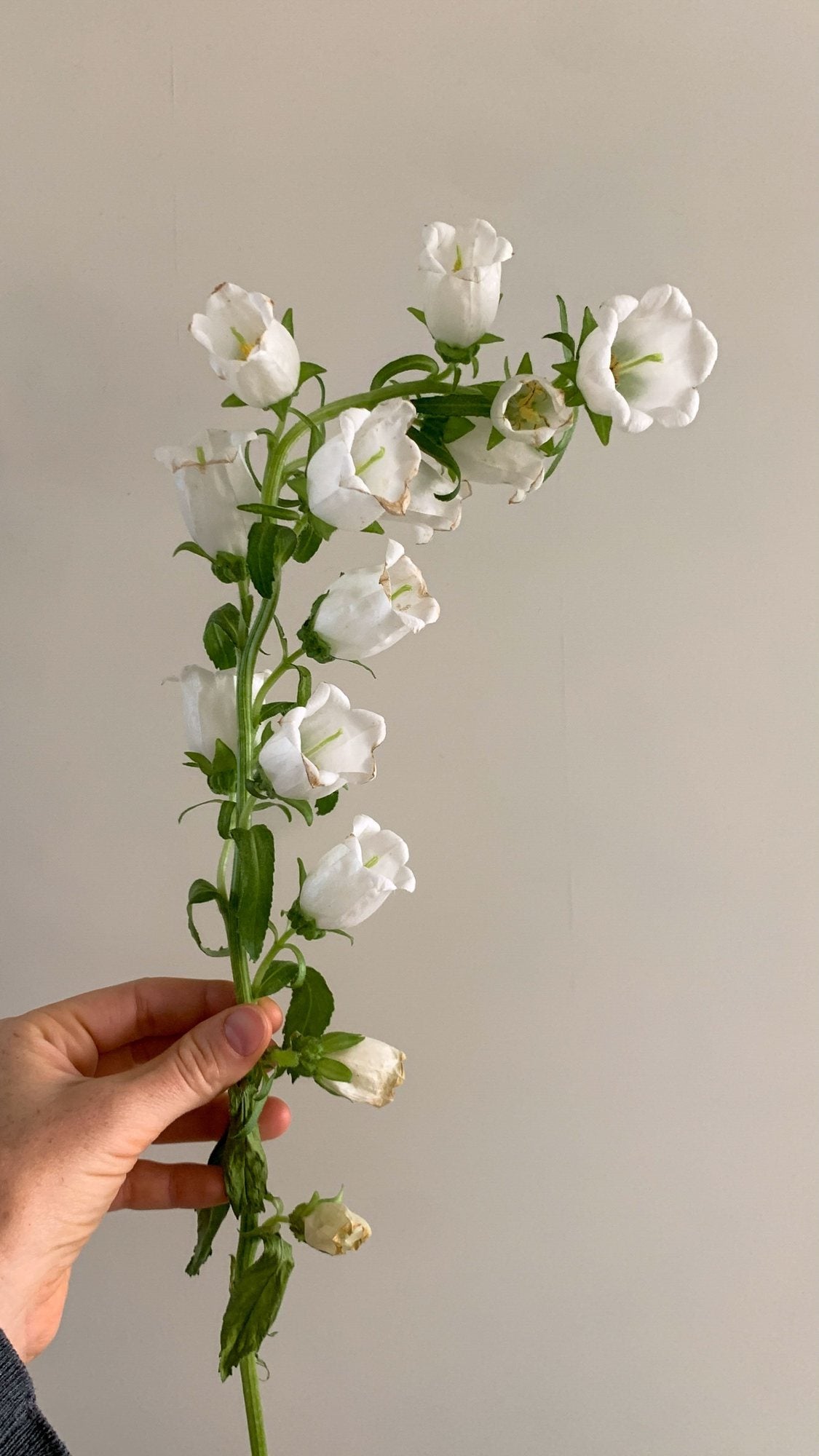
A stem of bellflowers, held up to the light
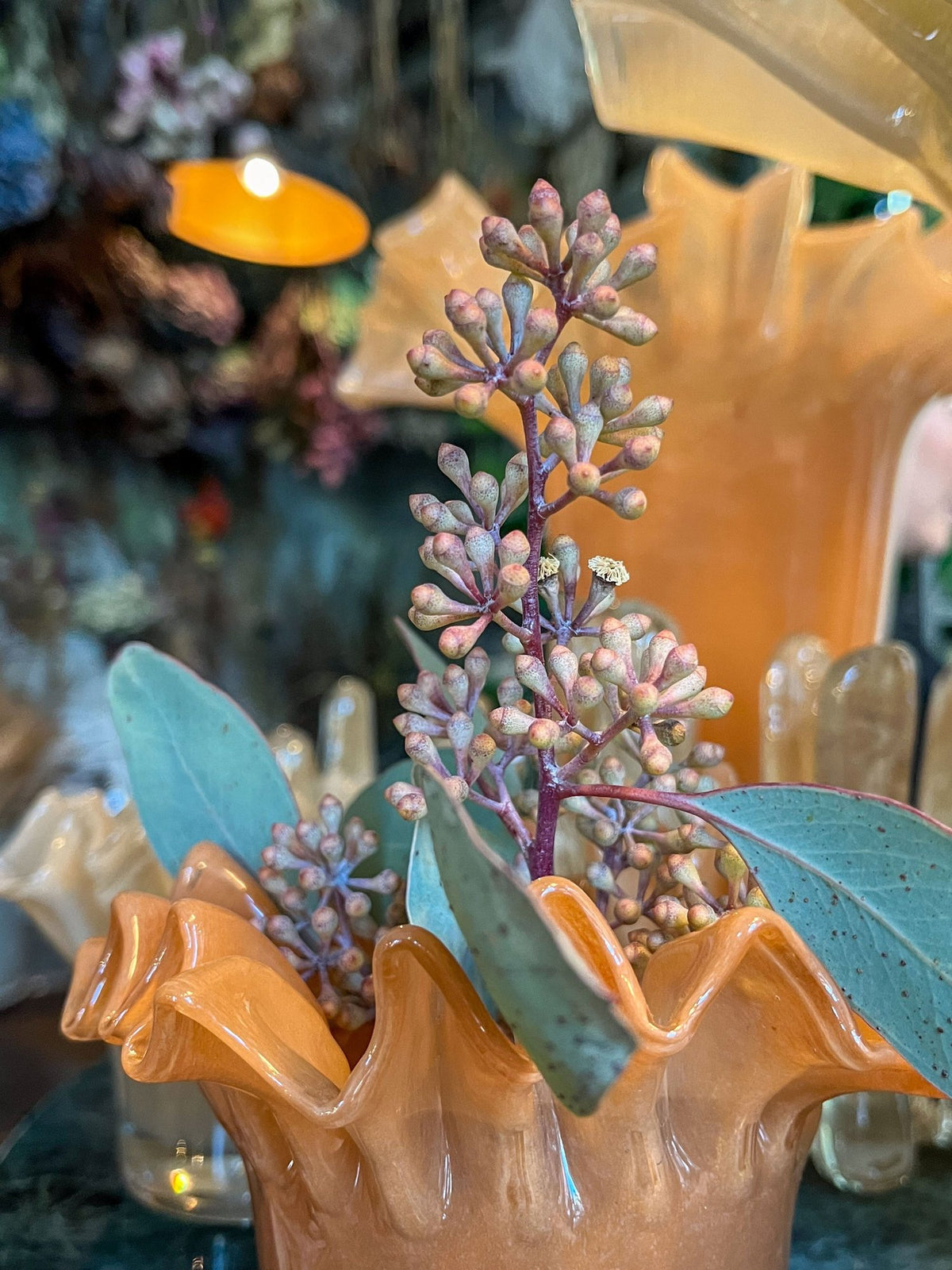
Eucalyptus buds in a glass on the studio table
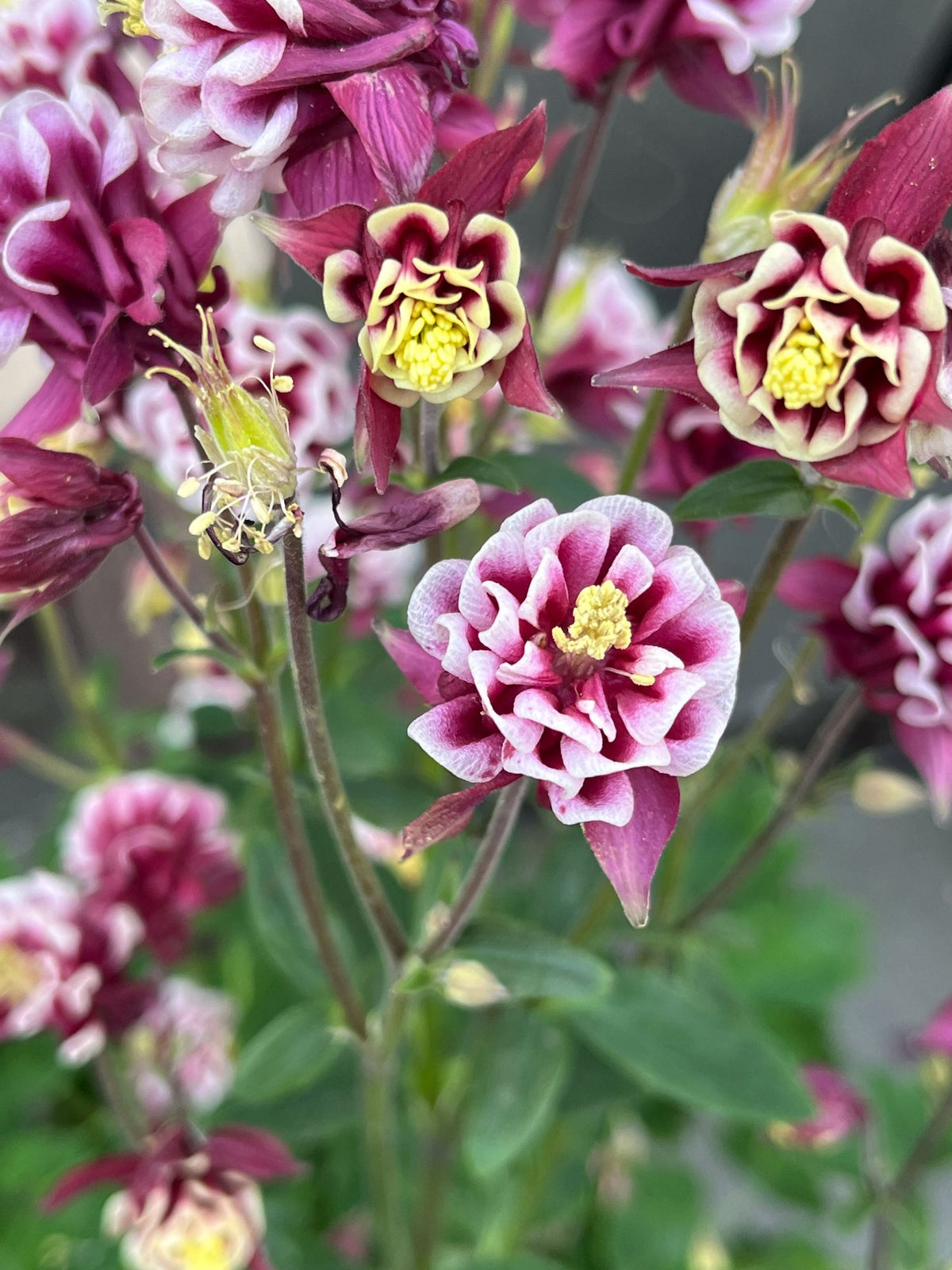
Columbines, doubled and ruffled like little roses
What she brings home
Karolina was born in Hälsingland, a region of painted rooms and decorated farmhouses. Most of her patterns begin as photographs: a flower, the carving on an old facade, the small marine plants along the shore on Gotland, the engraving on a glass jar from a loppis. She keeps them for a while, and draws from the ones that still hold up.
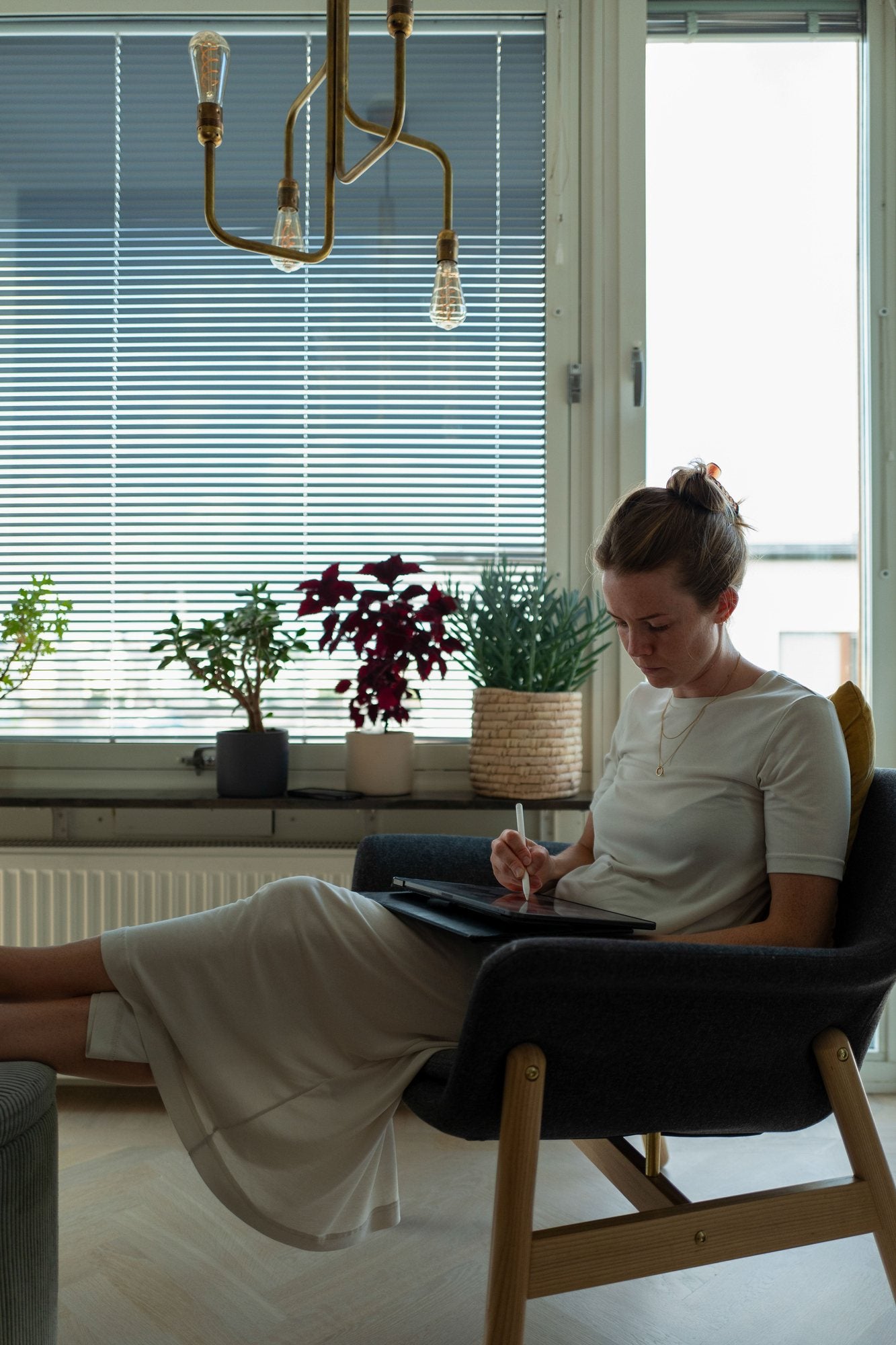
Karolina sketching a new motif at home
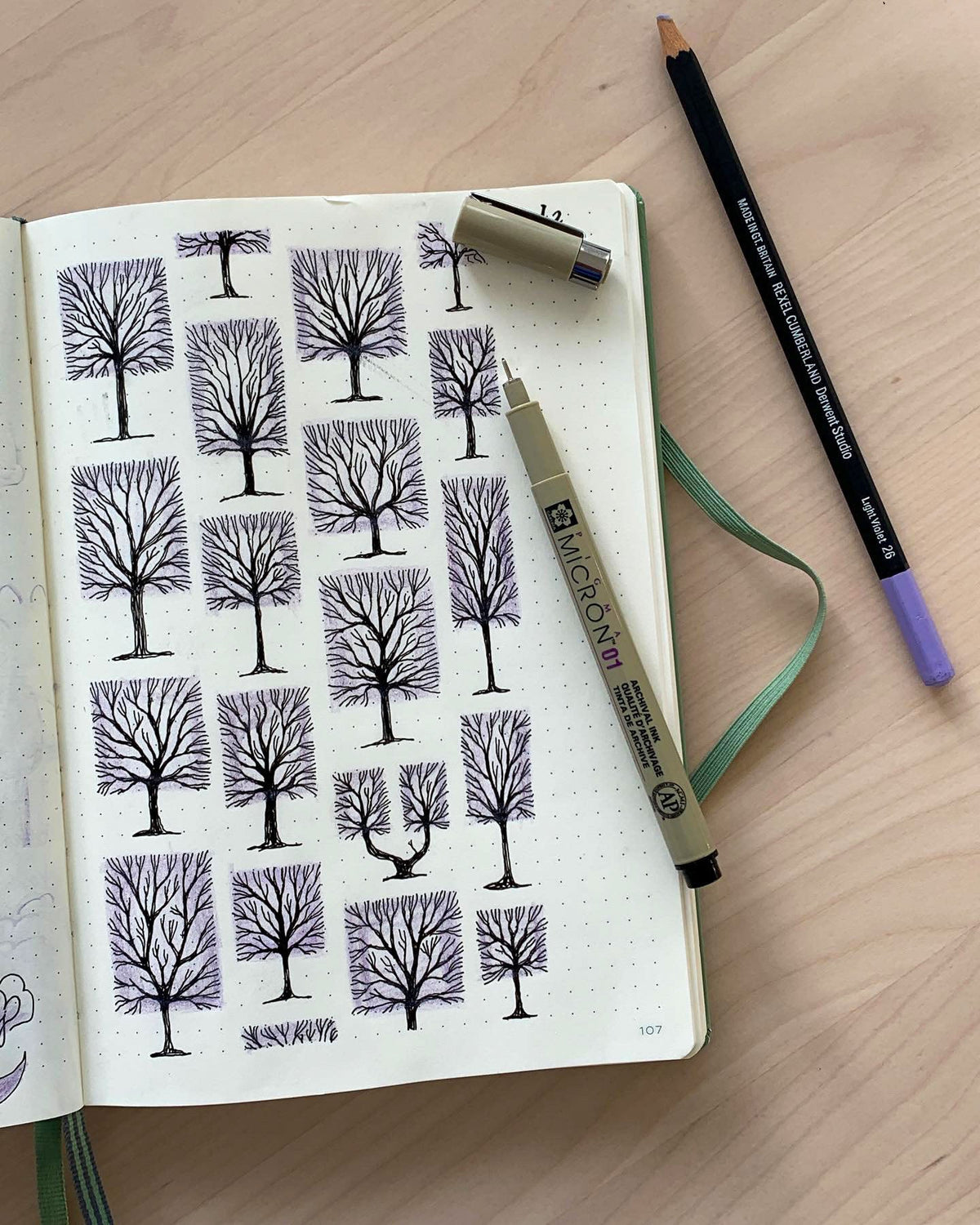
A page of tree studies, repeated until one earns its place
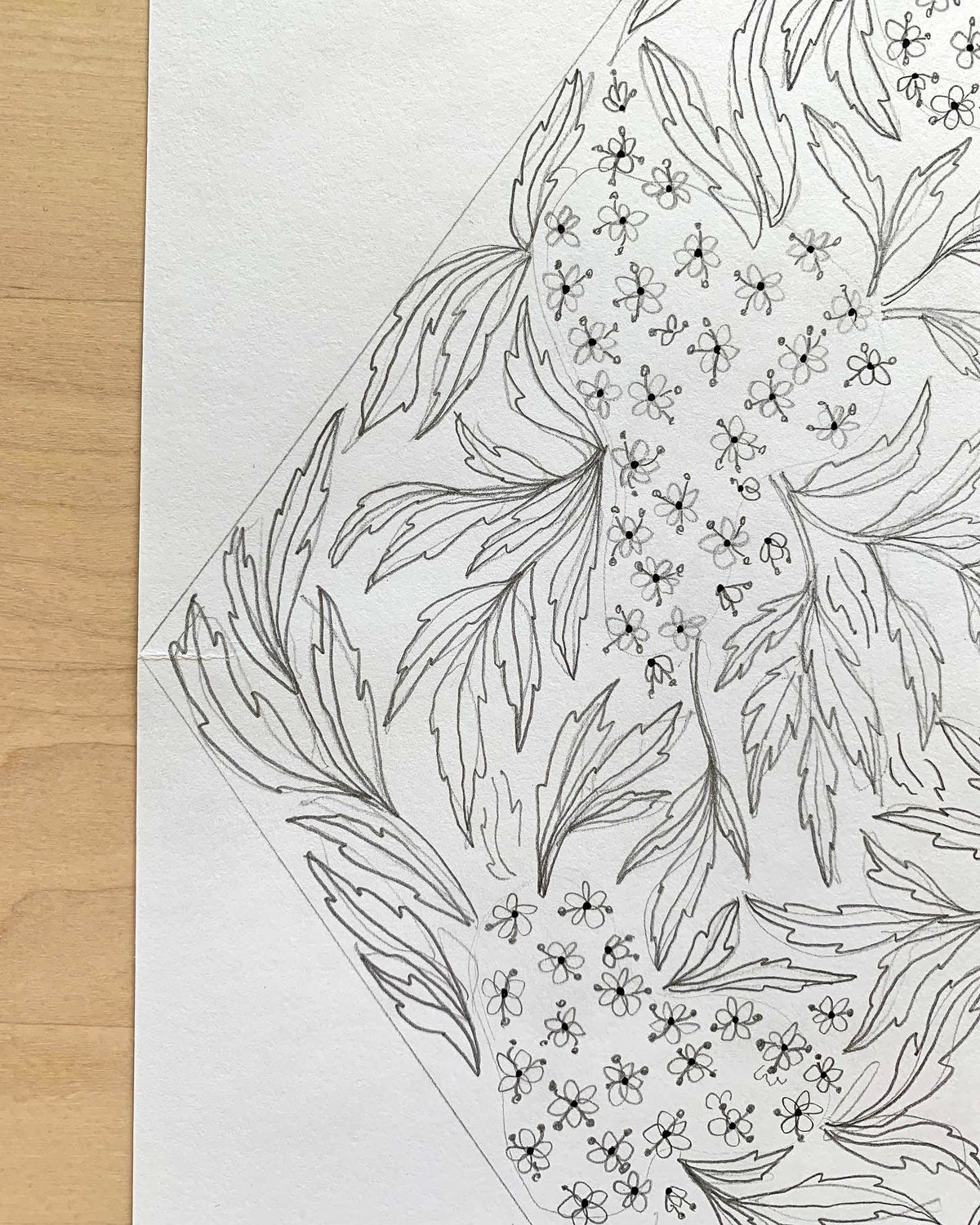
Working out where the pattern repeats, corner to corner
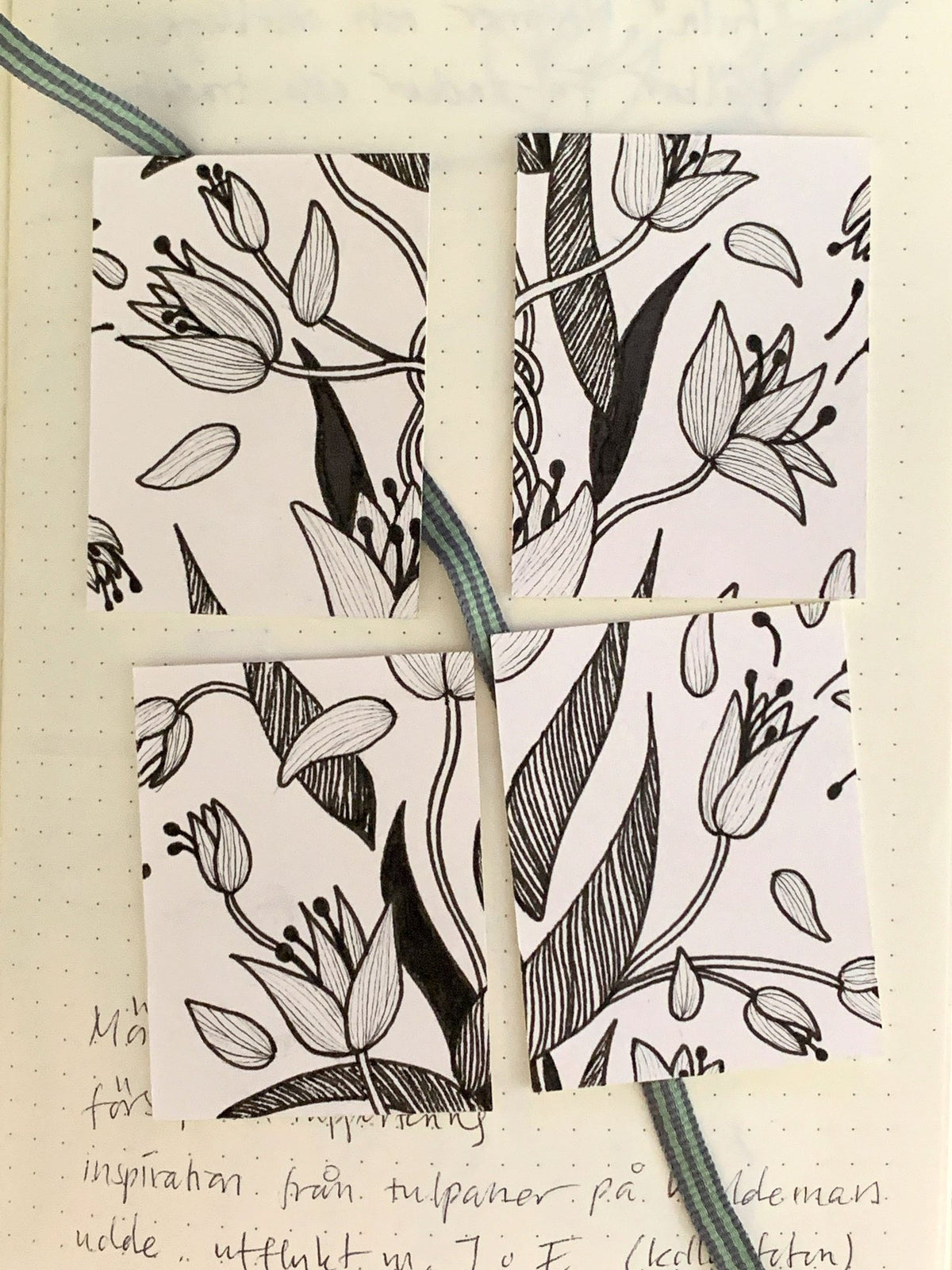
Tulip studies, cut into tiles to test how the repeat falls
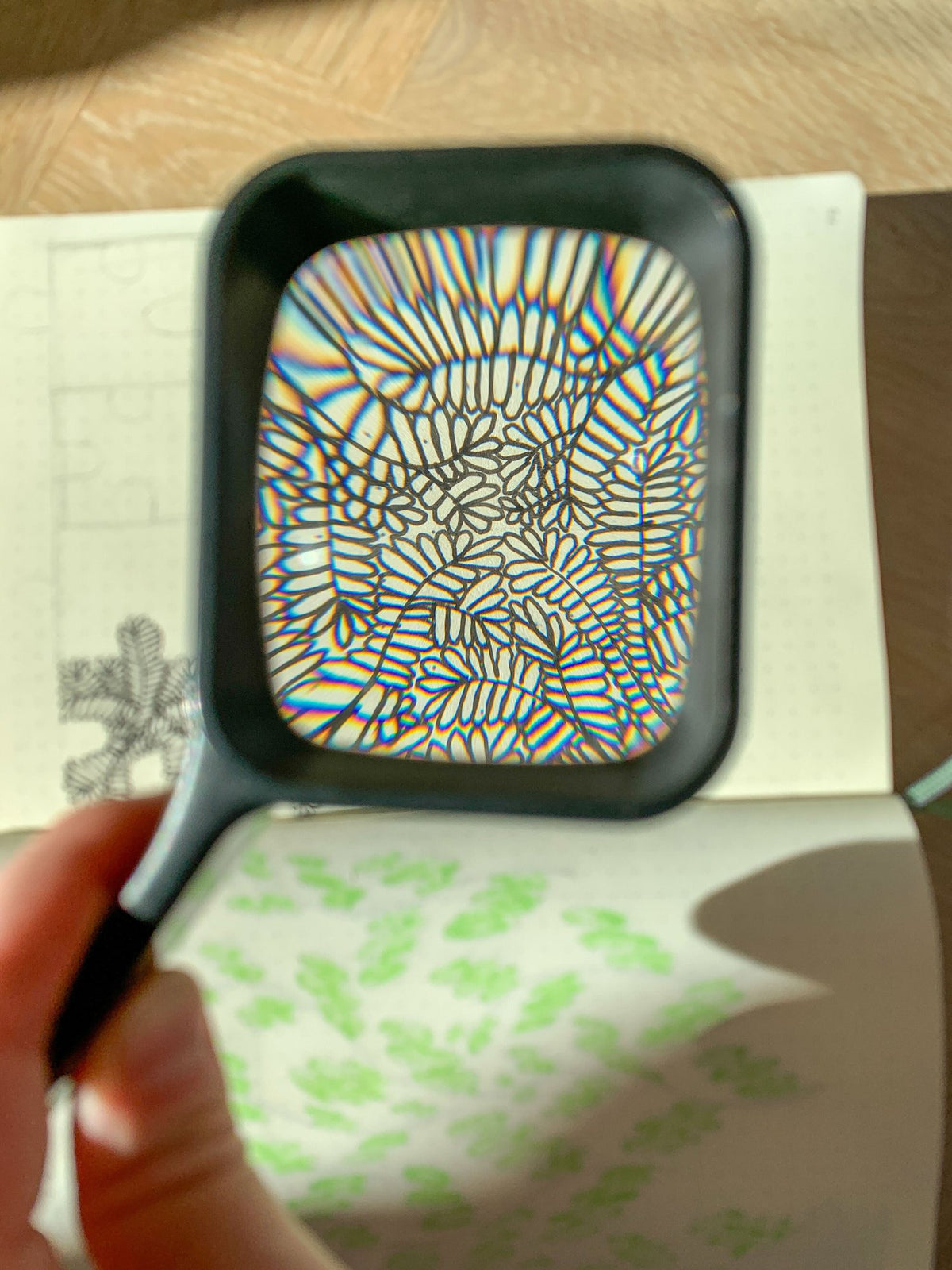
Checking a detail under a magnifying glass
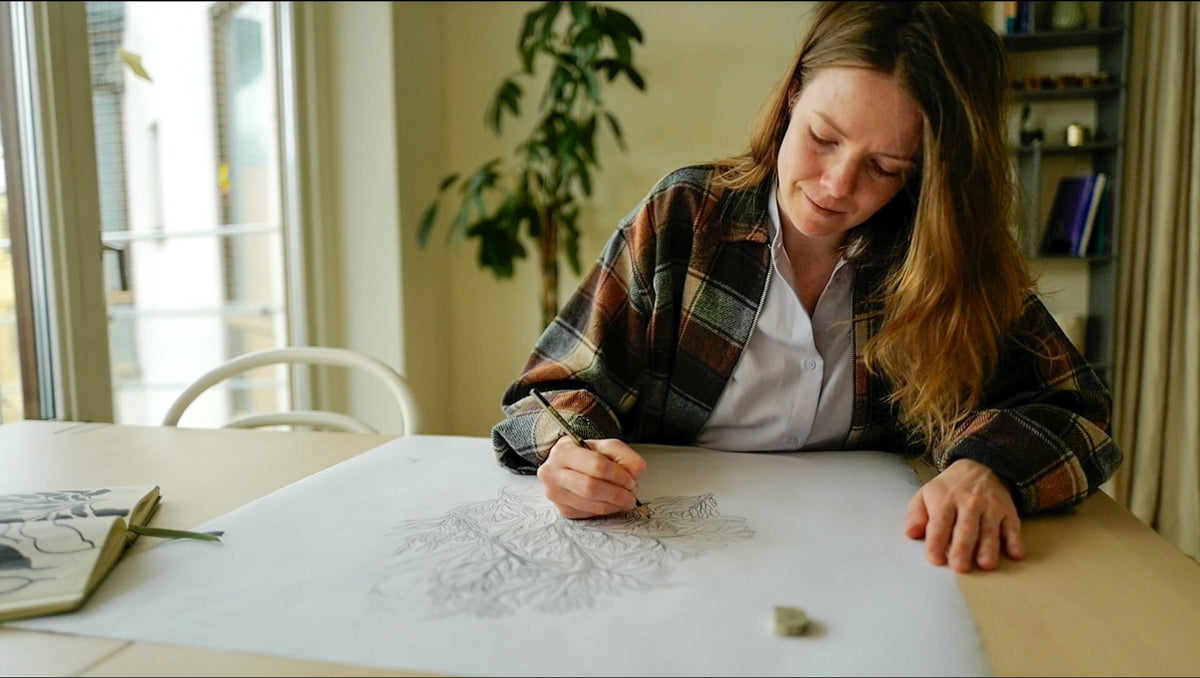
Drawing a motif at full scale, spread across the table
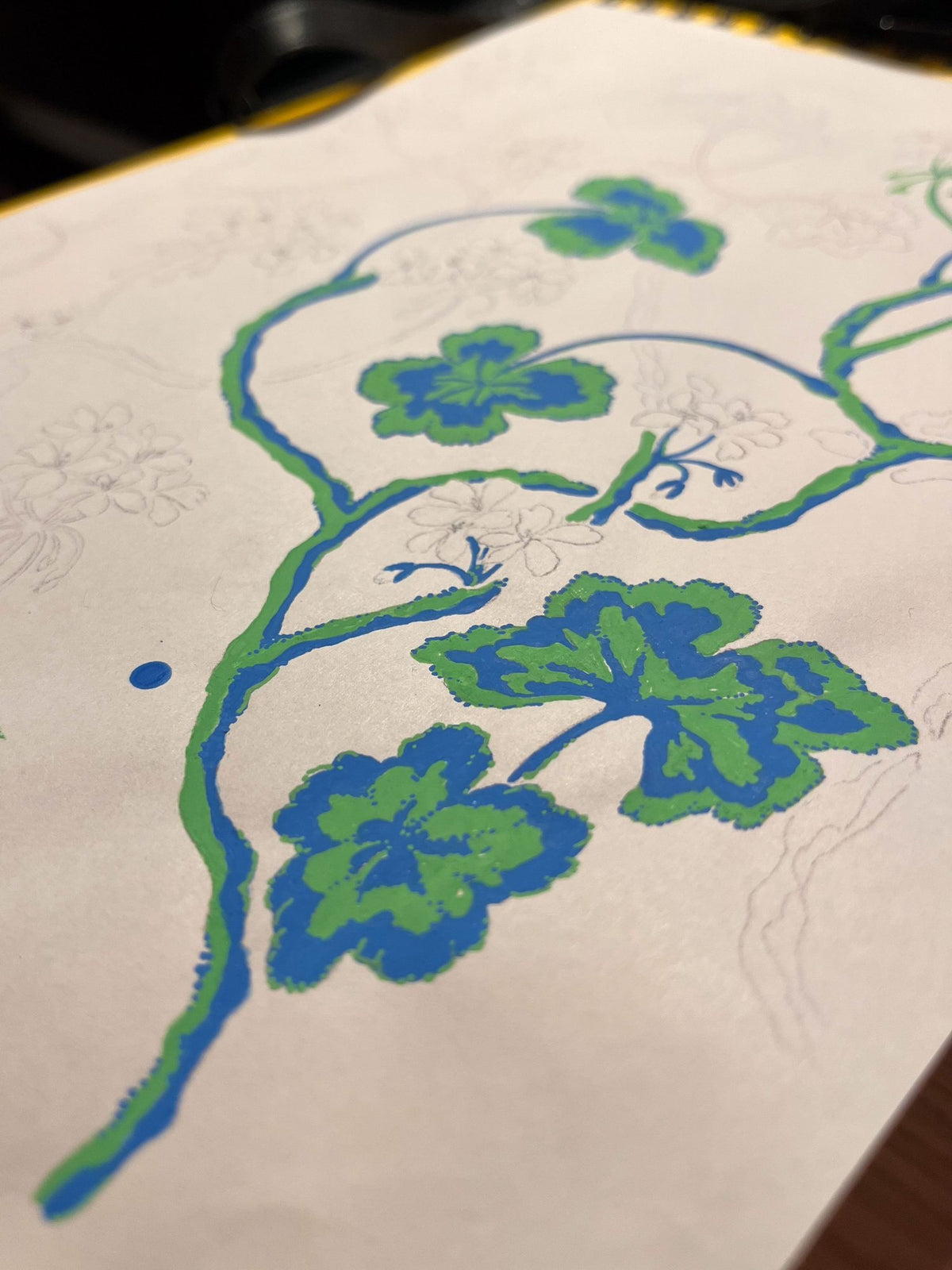
Testing a leaf in blue and green, one shape at a time
When the pencil can't stop
Between a photograph and a finished repeat lie dozens of loose pencil studies. Karolina redraws the same leaf or petal again and again, shifting an angle a few degrees, testing how one shape leans against the next. Some studies take a few minutes at the kitchen table; others take an afternoon, and most never leave the sketchbook. The hand keeps going past the point of thinking, correcting by feel rather than by plan, until a version turns up that finally looks like it was always meant to be there.

A unique recipe for each colour
Colour takes longer than the drawing, and each colourway is its own problem. For Citrus in Lapis Blue, Karolina wanted the deep blue of a southern evening sky in the saturated minute before dusk; the name comes from that depth, the blue of lapis lazuli. She mixes acrylics by hand until the shade is right, then sends it to the factory's colourist, who matches it for the press and sends back a proof. It usually takes a few rounds before the paper holds the colour she had in her head.

Karolina hanging Frodas
The press that takes its time
For a long time the patterns had nowhere right to be printed. Then they found the team at Ulricehamn, and the press there: an old machine that gives the colour its depth and leaves the small, uneven marks that make one length differ slightly from the next. The same craft can be done on cloth, on a different machine, which is where Norrviva goes next: a textile collection for 2027.


